World Polio Day 2026: why we still give to end polio
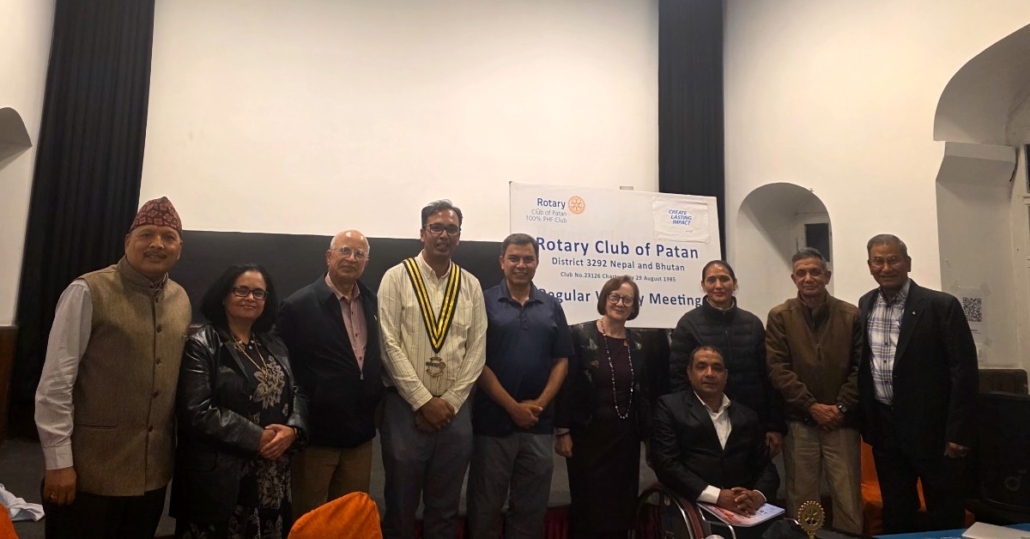
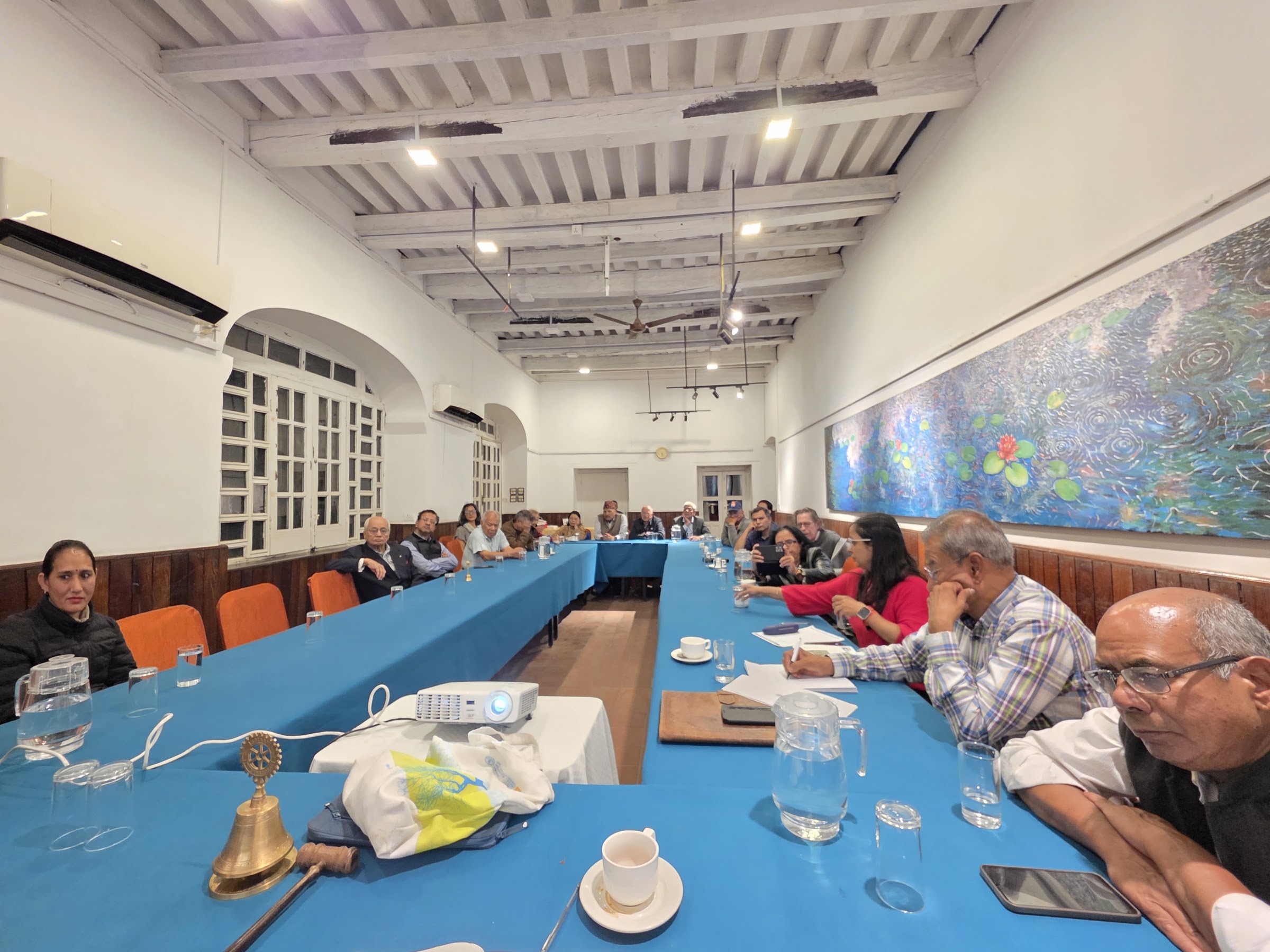
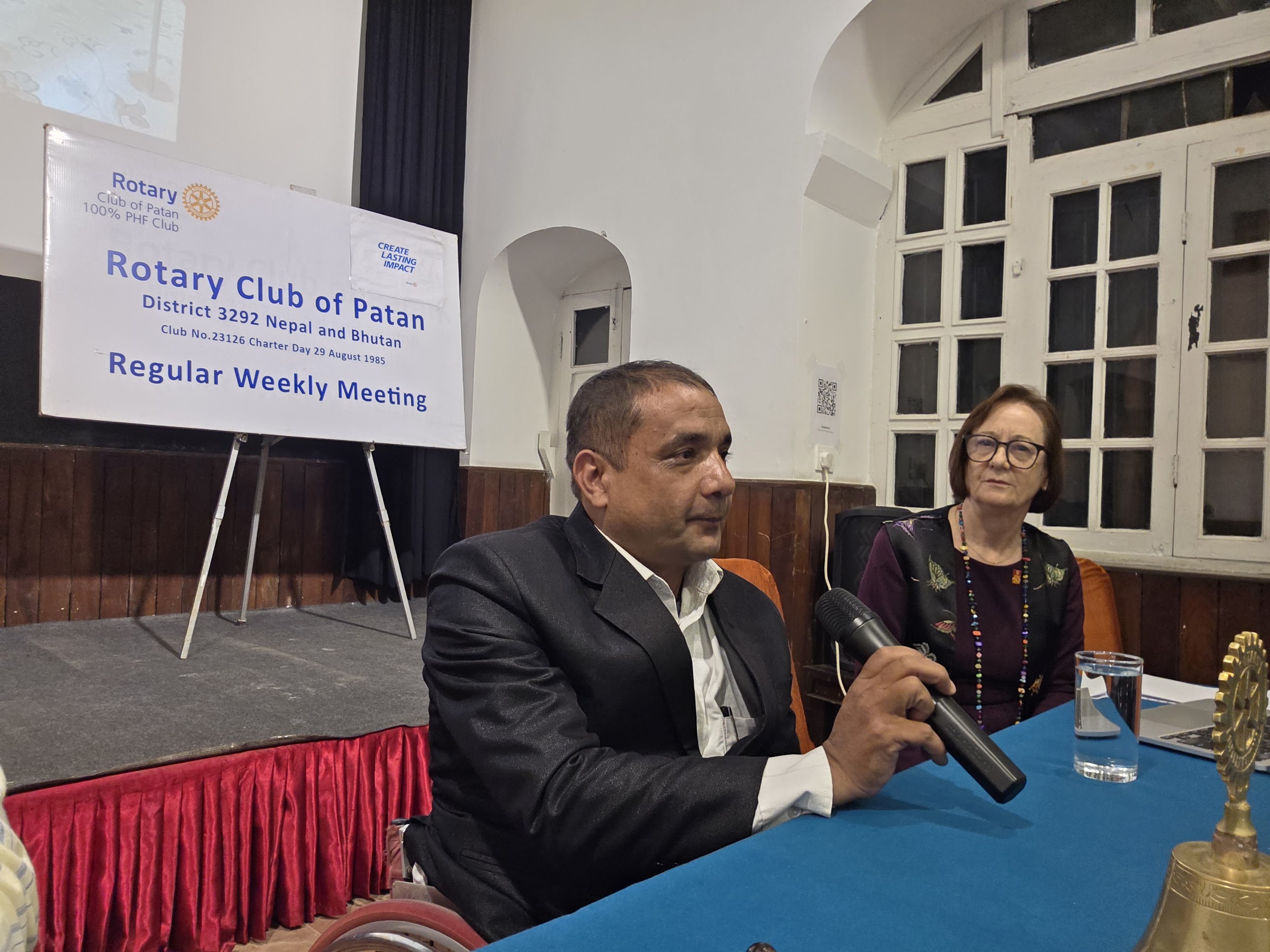
On 26 October 2026, our regular weekly meeting at Yala Maya Kendra marked World Polio Day. Rtn. Gabriele Mallapaty presented the history of the fight against polio, and Mr. Krishna Gautam shared his journey as a polio survivor. The evening closed with contributions to PolioPlus that, with matching, add up to about US$1,200 and NPR 60,000 for polio eradication.
Our contributions, multiplied
- Four members pledged a total of US$200 to PolioPlus, and our guest Dr. Abindra Sigdel contributed NPR 10,000 on the spot.
- Rtn. Gabriele Mallapaty matched every contribution one-to-one, bringing the total to US$400 and NPR 20,000.
- The Gates Foundation matches contributions to Rotary’s PolioPlus fund two-to-one, so the total impact is about US$1,200 and NPR 60,000.
More pledges followed: Rtn. Gabriele Mallapaty offered to match new member contributions one-to-one until 30 October 2026. By then, Rtn. Chandralekha Kayastha (US$200), Rtn. Bishwa B. Sharma (US$50) and Rtn. Jeevan K. Shrestha (US$25) had pledged a further US$275, which she will also match. Altogether, members and guests pledged US$475 and NPR 10,000 for World Polio Day; with her matching (rounded up to US$550), new pledges total US$1,025, plus NPR 10,000 and its match.
How the world came this close
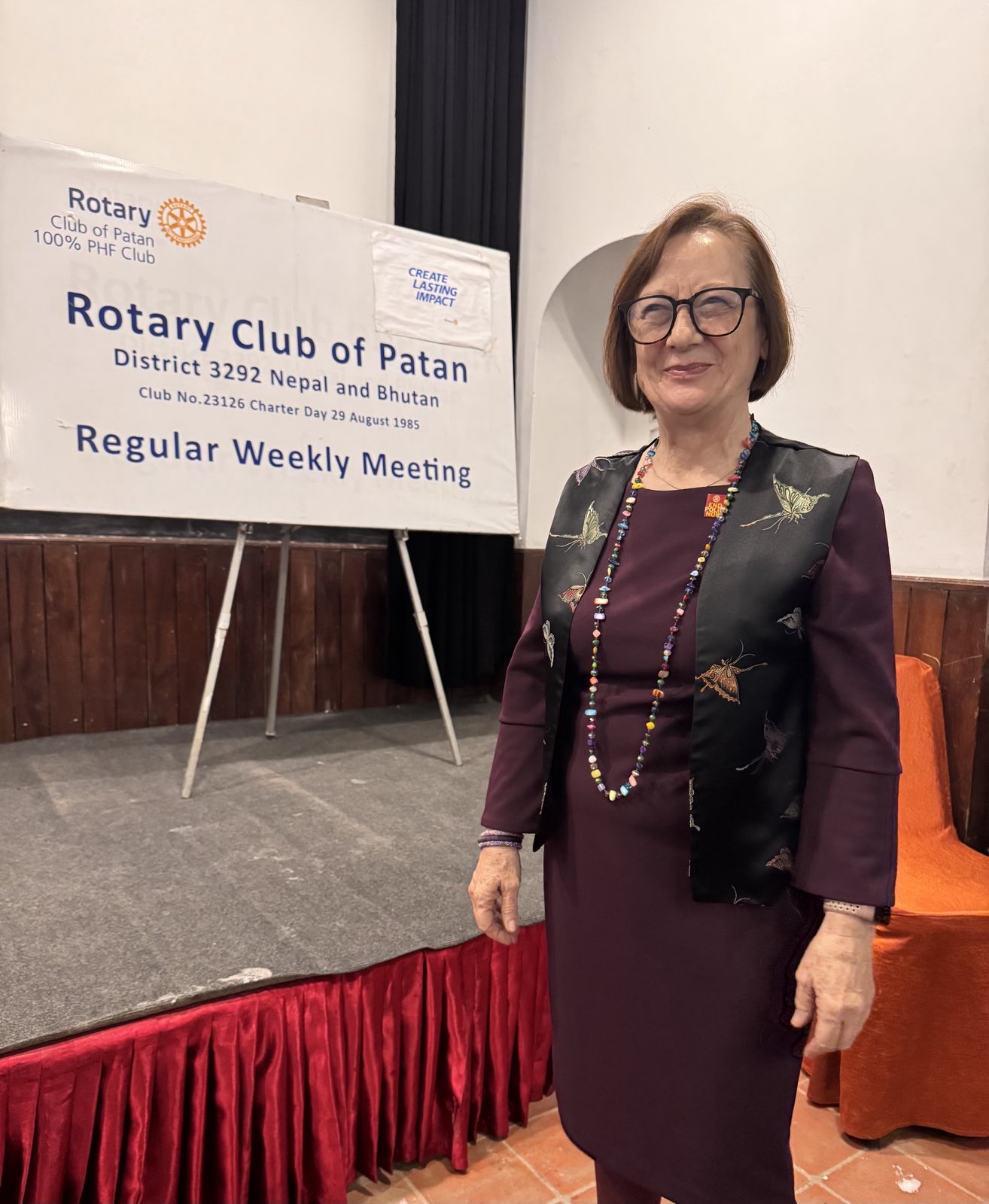
Rtn. Gabriele Mallapaty knows this story from the inside. From 2001 to 2008 she served with the Global Polio Eradication Initiative, representing UNICEF, and her work was recognised with a Paul Harris Fellowship presented by Rtn. Robert Scott, then Chair of The Rotary Foundation Trustees and a former Rotary International Vice-President.
She traced the science behind the fight: Dorothy Horstmann’s 1952 finding that the virus travels through the bloodstream; Dr. Jonas Salk’s inactivated vaccine in 1955 (24 October, World Polio Day, is his birth anniversary); Dr. Albert Sabin’s oral vaccine, which he refused to patent; and Dr. Mikhail Chumakov’s 1959 trials, which reached 10 million children.
Rotary stepped in in 1979, when its first 3-H grant funded oral polio vaccine for 6 million children in the Philippines. In 1985, under RI President Dr. Carlos Canseco and with the advice of Dr. John Sever and Dr. Albert Sabin, Rotary launched PolioPlus. It set out to raise US$120 million by 1988 and raised more than US$247 million. In 1988, the Global Polio Eradication Initiative was launched, with Rotary as a founding partner alongside WHO, UNICEF and the US CDC; the Gates Foundation and Gavi joined later.
Since 1988, polio cases have fallen by more than 99.9%, from about 350,000 a year (close to 1,000 children paralysed every day) to a small number today. Wild poliovirus now survives only in Afghanistan and Pakistan.
A survivor’s journey
Mr. Krishna Gautam was born in a village in Rukum District. He contracted polio in 1978, before the polio vaccine had reached Nepal, and his legs were left paralysed. His family tried every remedy they could find, traditional and modern, including treatment in India, at the cost of all their savings, until they accepted that the paralysis could not be cured.
They did not give up on his future. His parents carried him to and from school, and he went on to complete his bachelor’s degree in 2004. He has since worked as an advocate and social worker for people with disabilities. After a year of training in Japan, he took up the concept of independent living and in 2006 helped establish a centre for independent living. Since 2017 he has served as Executive Secretary-General of the Independent Living Centre, Lalitpur, and as Executive Secretary of the National Federation of the Physically Disabled, Nepal, bringing more than two decades of leadership and advocacy to disability rights.
His story is a reminder of what polio takes from children and families, and of why no child today should have to face it.
Nepal’s polio journey
Following Mr. Gautam’s story, Rtn. Gabriele Mallapaty took us through Nepal’s own history: oral polio vaccine (OPV) in routine immunisation from 1981; National Immunisation Days and acute flaccid paralysis surveillance from 1996; elimination of indigenous wild poliovirus around 2000; certification as polio-free with the WHO South-East Asia Region in March 2014; and, the same year, the introduction of the injectable polio vaccine (IPV), making Nepal the first South Asian country to do so.
She explained why both vaccines matter. OPV, “the gut protector”, stops the virus spreading in the community. IPV, “the blood protector”, gives each child reliable individual protection against paralysis.
She closed with what lies beyond eradication: using the campaigns built for polio to deliver soap, clean water and other vaccines such as measles, typhoid and vitamin A; strengthening routine immunisation for children who have never been vaccinated; and reaching remote communities through civil society partners.
The questions members asked
Members asked the questions many people ask, and both speakers answered them:
- Why do we still need to contribute? While polio exists anywhere, children everywhere are at risk. Stopping short of zero would undo decades of investment.
- Why doesn’t Rotary look beyond polio? It does. Polio is one of Rotary’s areas of focus, and our club runs scholarships, heart health, disability inclusion and other projects alongside it. Polio is the promise Rotary made to the world’s children in 1985, and we intend to keep it.
- Why mark World Polio Day every year? It keeps the unfinished job visible, brings new members into the story, and drives the giving that unlocks the Gates match.
The presentation
Rtn. Gabriele Mallapaty has kindly shared her slides. Download the presentation (PDF, 2.4 MB)
Thank you
Our thanks to Rtn. Mahendra S. Rawal, Rtn. Shiv Prakash Khemka, Rtn. Khadak S. Bisht and Rtn. Shikha Prasai for their pledges, and to Dr. Abindra Sigdel for his contribution. Thank you to Rtn. Gabriele Mallapaty for her presentation and for matching every contribution, to Mr. Krishna Gautam for sharing his journey, and to Rtn. Sandhya Regmi for bringing our guest speaker and giving the vote of thanks.
Earlier, on World Polio Day itself, our members rode in the Mega-Polio Cycle Rally from Bhaktapur Durbar Square.
You can contribute to PolioPlus at endpolio.org.
Sources: minutes of the Rotary Club of Patan meeting no. 2023, 26 October 2026; Board meeting of 30 October 2026; Lalitdhara 1682.

