
Using AI well: a quick guide for our members
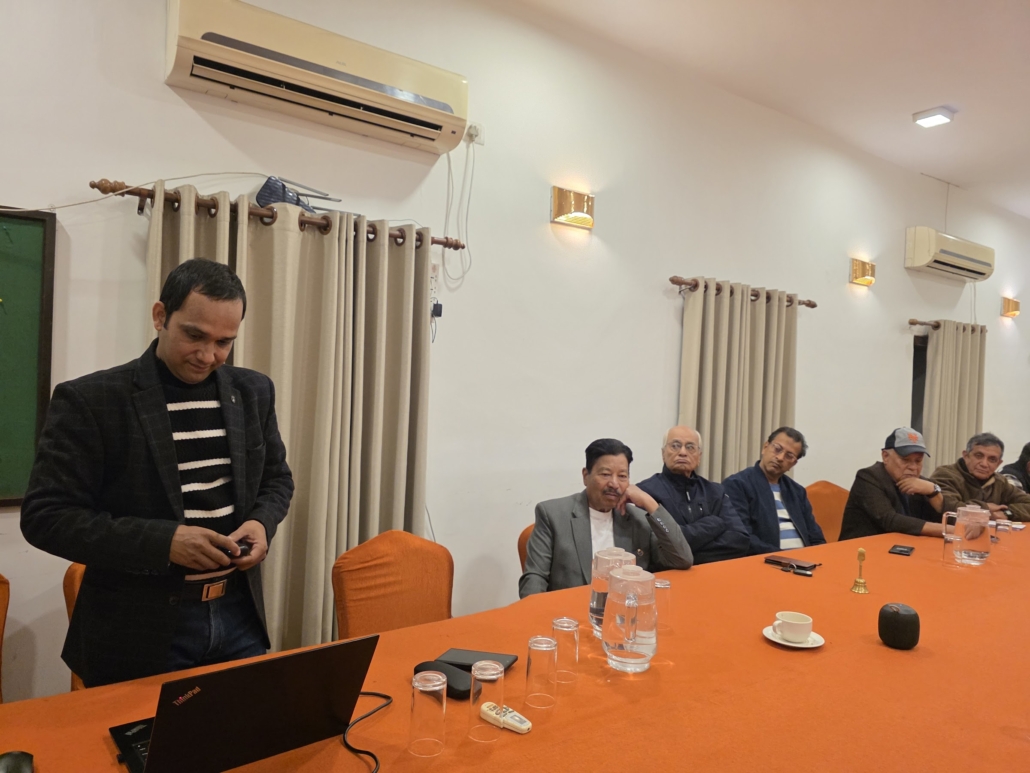
This guide draws on the materials Er. Sanam Adhikari of UNFPA Nepal prepared for his talk, “AI for Our Club and Members”, at our regular meeting on 23 November 2026. We share it with his permission so members can keep practising.
1. Write clear prompts: Role, Context, Task, Format, Output
An AI assistant gives better answers when the request is complete. Er. Adhikari suggested building every prompt from five parts, which he called RCTFO:
- Role: who should the AI act as? For example, “Act as an experienced financial analyst.”
- Context: what background does it need? Give the facts, figures and situation.
- Task: what exactly should it do? Analyse, compare, summarise, draft.
- Format: how should the answer be organised? Sections, tables, bullet points.
- Output: what final product do you need? A one-page briefing, an email, a plan.
Then read the answer critically, check facts and calculations, and refine the prompt if something is missing.
2. Use AI to assist, keep people accountable
- Protect information. Do not enter member contact details, donor records, financial information, scholarship applications, beneficiary profiles or medical records into public AI tools. Use public, fictional or anonymised information.
- Treat AI output as a draft. A named person checks facts, figures, sources and tone before anything is shared or acted on.
- Keep decisions with people. AI must not decide scholarships, beneficiary eligibility or other consequential matters.
- Respect professional limits. AI must not diagnose, prescribe or replace qualified judgement in medical, engineering, aviation or other safety-critical work.
- Watch for fraud. Verify unusual payment requests, urgent messages and voice or video calls through a second trusted channel. Deepfakes can look and sound real.
3. Five prompts to try
Executive summary
“Act as an experienced professional adviser. Summarise the attached [report] for a senior leadership audience in no more than 250 words. Identify the main findings, implications and recommended actions. Use only information contained in the document and flag any gaps.”
Risk and gap review
“Review this [proposal/project plan] as a critical reviewer. Identify unclear assumptions, delivery risks, missing evidence, dependencies and unanswered questions. Separate issues explicitly stated in the document from your own observations.”
Meeting minutes
“Convert the following meeting notes into draft minutes. Separate discussion, decisions and action items. For each action, show the owner and deadline only where provided. Do not invent attendees, decisions or commitments.”
Project indicators
“Based on the project objective and context below, propose a small set of measurable indicators. For each, provide definition, unit, data source, frequency and limitations. Do not invent baseline or target values.”
Member communication
“Draft a warm, concise and professional email to club members about [event/topic]. Include the purpose, date, venue and requested action only where details are supplied. Use a tone appropriate for a Rotary club.”
Read the story of the talk: AI for our club and members: Er. Sanam Adhikari’s talk.
